


Overview
Innovation For A Brighter Future
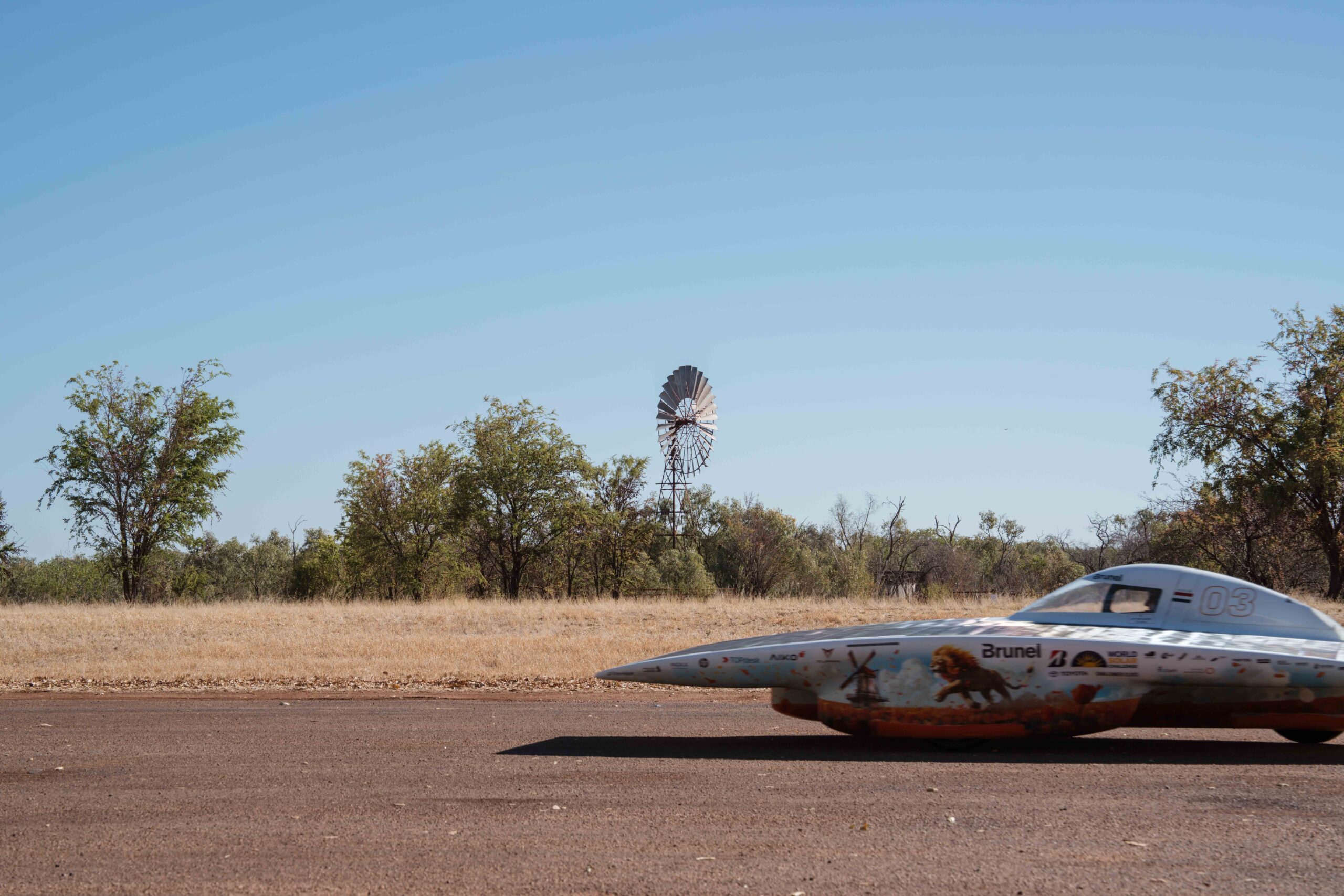
For almost 40 years, the Bridgestone World Solar Challenge has welcomed some of the brightest minds from around the world to Australia, challenging them to push the boundaries of technological innovation and traverse the outback in vehicles powered solely by solar energy.
Typically comprising tertiary and secondary students, teams travel 3,000 kilometres from Darwin to Adelaide in energy-efficient electric vehicles that they design, engineer and build themselves.
The Bridgestone World Solar Challenge brings together the world’s leading innovation challenge, advancing the future of sustainable personal transport.
First held in 1987, the event runs every two years and will celebrate 40-year anniversary in 2027. In 2019, it attracted a record 53 entries from 24 countries, with around 1,500 participants and a global audience of more than 25 million. The event continues to foster strong industry partnerships across the energy, automotive, engineering, financial services, materials science and IT sectors. Alumni of the event have gone on to work with some of the world’s leading companies in engineering, automotive innovation, and sustainable transport.
The Journey
Based on the original notion that a 1000W car would complete the journey in 50 hours, competition vehicles are allowed a nominal 11MJ (Challenger) and 55 MJ (Cruiser) of stored energy. All other energy must come from the sun, renewable energy or be recovered from the kinetic energy of the vehicle. These are arguably the most efficient electric vehicles.
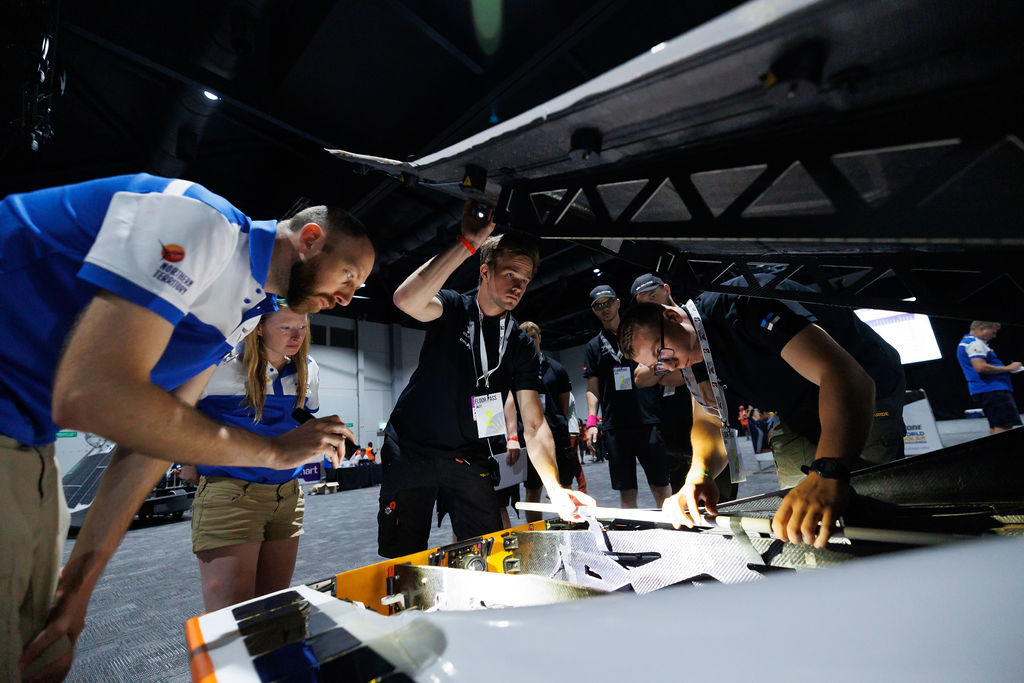
Having made the journey to Darwin by successfully navigating quarantine, customs, scrutineering, safety inspections and undertaken event briefings, participants start their epic road journey.
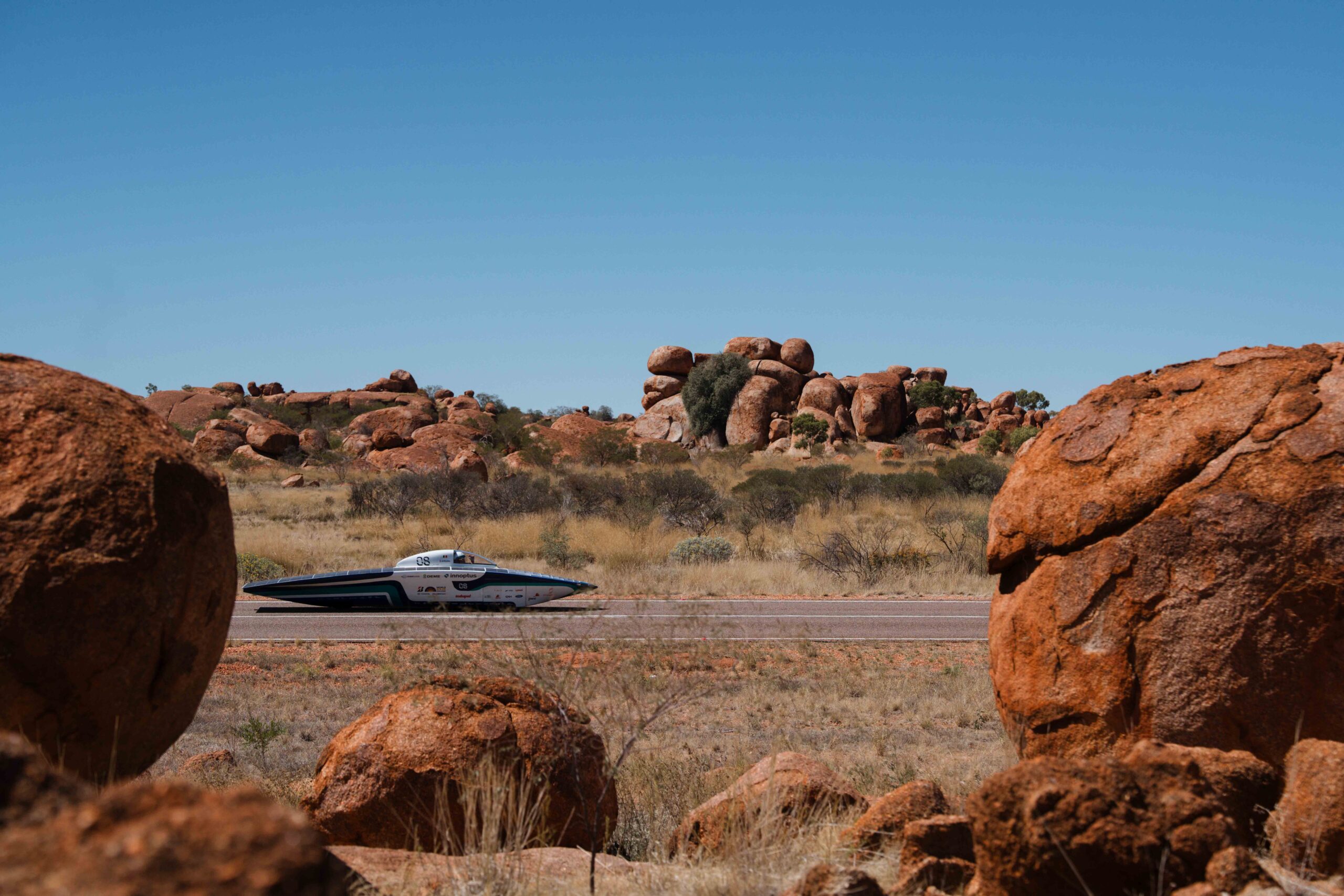
Once the teams have left Darwin they must travel as far as they can until 5:00pm in the afternoon where they make camp in the desert wherever they happen to be. All teams must be fully self-sufficient and for all concerned it is a great adventure. Many say the adventure of a lifetime.
During the journey there are 9 mandatory check points where Observers are changed and Team Managers may update themselves with the latest information on the weather and their position in the field. At check points, teams can perform the most basic of maintenance only: checking and maintenance of tyre pressure and cleaning of debris from the vehicle.
THE CLASSES
Participating teams enter their vehicle into one of the following four classes:
- Historic class is for vehicles that competed in previous World Solar Challenge events. These vehicles will feature in track competitions, parades and special events along the route.
- Toyota Challenger class is a competitive class for single-seat vehicles optimised for converting solar irradiance to speed.
- Cruiser class is a competitive class for vehicles with two or more seats that will be judged on practical design features as well as efficiency.
- Innovation class is a non-competitive class for demonstrating innovative concepts that could set the future direction for the Bridgestone World Solar Challenge.








Subscribe to our newsletter
Sign up to receive the latest BWSC news and announcements straight to your inbox